Taming the Tempest: What a 1981 arcade game teaches us about the topology of AI innovation
We are currently living through an era of AI brute force. Most of us are stuck in a cycle of blind prompting - throwing more adjectives at a Large Language Model, adding more compute, and hoping that if we just vibe hard enough, the machine will eventually spit out a miracle. We treat AI like a black box to be bargained with, rather than a system to be navigated.
But last week, Dave Plummer (the legendary Microsoft engineer behind the Windows Task Manager) posted a video that should be the North Star for anyone trying to scale AI strategy. He didn’t just beat his own world record in the Atari classic Tempest; he broke through a year-long performance plateau by making a fundamental shift in his conceptual geometry.
To be clear: Dave didn’t use the lexicon I’m about to describe. He arrived at his brilliant breakthrough through world-class engineering intuition. However, Dave’s story is the perfect vehicle for demonstrating a powerful, strategic, but latent lexicon: the philosophy of Deleuze and his modern-day interpreter, the philosopher and polymath DeLanda.
By adopting their vocabulary - specifically the mechanics of Assemblages, Intensities, Territorialisation and Singularities - we move beyond the vibe-coding of the amateur and begin engineering breakthroughs with the surgical clarity of a Tier-1 strategist.
This isn’t just about using fancy terms; it’s about having a precise map for how systems actually evolve and break through plateaus. Here is how that Tier-1 lexicon applies to Dave’s Tempest story:
The Heuristic: Dave’s Wall and the Polar Breakthrough
For a year, Dave’s AI was ‘competent-ish.’ It played like a talented human but hit a hard ceiling - a Plateau. Dave realised the problem wasn’t a lack of data; it was a mismatch of worldviews. The AI was trying to navigate a circular, 3D tube using a flat grid map. It was like trying to sail the globe while insisting the Earth is flat.

The breakthrough came from two specific shifts:
-
Polar Mapping: He stopped forcing the AI to see ‘X and Y’ and let it see ‘Angle and Depth.’
-
Prioritised Replay: He stopped letting the AI treat every second of footage as equal and forced it to obsess over the ‘surprising’ moments of failure.
Here’s how that scales from a niche optimisation to a universal strategy for innovation.
Phase 1: Joining the Assemblage
Before code was even written, Dave is immersing himself in the body of the game. He didn’t just treat the AI as a separate tool; he formed what Deleuze calls an Assemblage. To be overly reductive, an Assemblage is a-thing-composed-of-lots-of-different-things-that-can-still-be-decomposed and in this case, it is the functional heterogenous group where Dave (a human), the code, and the environment (the game’s memory) became a single moving entity.
Dave achieved this through an A-signifying Rupture. Most vibe-coders look at the Signifiers - the pixels on the screen, the ‘visuals’ of the game. Dave bypassed the skin of the game entirely. He didn’t care about what the game looked like (the representation); he hooked directly into the RAM (the raw intensities). He went beneath the surface meaning to engage with the Machinic Phylum - the raw data streams of the 6502 machine code.
The Strategic Pivot: Success in AI isn’t really about ‘using a tool’, it’s about how you seamlessly integrate the AI into the actual physics of your project or business. If you treat it as an outsider, it will always hallucinate an outside perspective.
Phase 2: Moving from Striated to Smooth Space
Once inside the system, Dave realised he had trapped his AI in Striated Space - a rigid, artificial grid. He was feeding it data in squares, but the game was a circle.
By switching to Smooth Space (the Polar Coordinates of the Tempest tube), he gave the AI legibility. This is the principle of Decalcomania vs. Mapping: Most AI projects at the moment are ‘decalcomania’ - they try to trace a pre-existing image (the grid) onto a problem. ’Decal’ as in mass-produced art transfer. Dave stopped tracing (copying the past) and started mapping. He allowed the AI to navigate the multiplicity of the tube - where every lane and depth is connected in a continuous web rather than just a series of isolated boxes.
The Strategic Pivot: Stop ‘blind prompting’ and start mapping the real ‘geometry’ of your problem. Are you asking your AI to solve a circular problem using square instructions?
Phase 3: The Nomad Scientist and the Difference Engine The real magic happened when Dave shifted his methodology from that of a Royal Scientist to a Nomad Scientist.
- The Royal Scientist (The Grid-Binder) seeks the Universal Law. They want a model that handles the average case perfectly. They treat data as Extensive - focusing on volume, length, and “more-ness” (e.g., 15 million frames). This approach hits a plateau because it is obsessed with the typical.
- The Nomad Scientist (The Singularity-Chaser) was Dave’s breakthrough. The Nomad follows the Singularities - the accidents, the surprises, and the TD Errors. This is what DeLanda calls Intensive thinking.
By building a Prioritized Replay system, Dave created a Difference Engine. DeLanda argues that change is driven by intensities - differences in pressure or ‘surprise.’ Dave realised that Extensive volume hides Intensive truth. He stopped trying to boil the entire ocean (a waste of compute) and instead built a Difference Engine that only applied heat to the points of highest pressure.
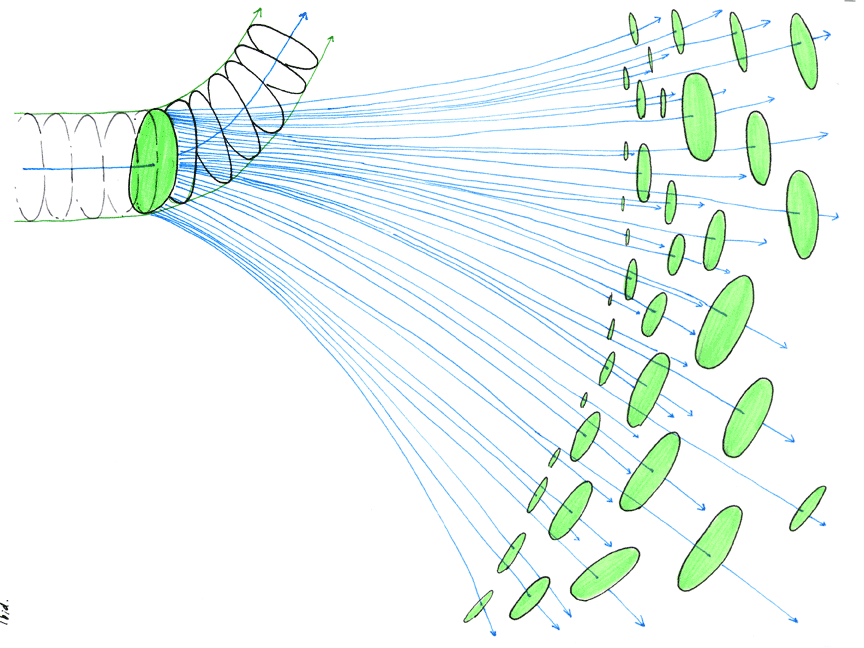
Prioritizing surprising frames, Dave created a Line of Flight. He allowed the AI to escape the boring, repetitive loops of average play and focus only on the Singularities - the high-intensity moments of near-death.
The Strategic Pivot: You don’t need more data, you need intensive data. Stop seeking the universal averages, the Extensive, the low-pressure, high-volume, and energetically expensive. Shift to focusing on the Intensive, the high-pressure singularities.
Phase 4: The Folding of Time and Becoming-Superhuman
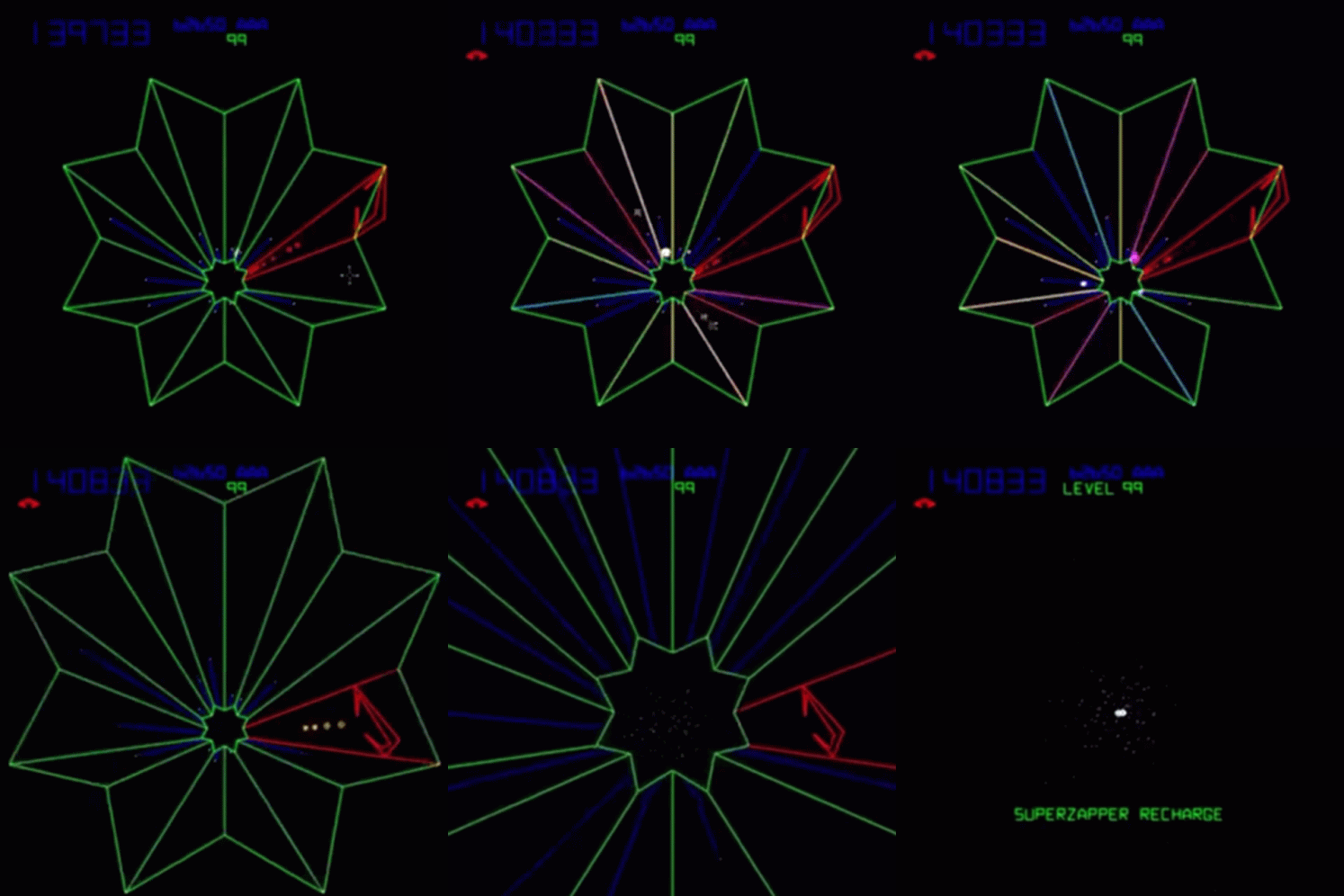
By focusing on high-intensity singularities, the AI underwent what Delueze and DeLanda call Deterritorialization - shattering the ‘human’ performance benchmark to enter a state of Becoming-Machine. Dave’s prioritised buffer acts as a Deleuzian Fold, where the most surprising moments of the past are folded directly into the present. This creates a Rhizome between the code and the game’s internal geometry. The AI ceases to play Tempest as an outsider, it becomes an extension of the tube itself, navigating the smooth space of the machine code with a brutally correct precision that connects any two points in the game-space instantaneously.
Why this Vocabulary is Your Secret Weapon
You might well ask: Why do I need these fancy French words? Well, because words like Assemblage and Singularity aren’t just jargon, they are navigational coordinates. And to be provocative, what else have you got? What language does one use that encompasses the dynamic and spatial and ontological? The properties and capacities of human and machine that we are witnessing?
If you’re at a point over lunch and you say, “the AI is acting weird,” you have no solution. But if you say, “The model has plateaued because we’ve trapped it in a striated grid; we need to prioritise its replay of high-intensity singularities,” you have a very clear articulation and enunciation of a situational awareness. You have strategy.
Digital and internet terminology became ubiquitous because we needed a way to talk about the (then) new world. In 2026, we need a Cartography of the Machine and Deleuzian philosophy and its remarkably lucid terminology - refined by DeLanda - is the strategic operating system for AI innovation (and a whole lot more). It’s not only thoroughly thought-through but it’s a stunningly appropriate topology for where-we-are and where-we-might (or might-not) want to go.
Dave Plummer didn’t just beat the game; he showed us that when you align your thinking with the true geometry of a problem, the Superhuman results follow as a matter of course. So the next time you’re stuck, don’t just add more prompts. Ask yourself: “Is your model tracing a habit or mapping a flow?"