
Stasis
Pulled in every direction at once, and going nowhere
Pick up your phone and within a few seconds you’ve gone from aww to contempt to revulsion. A play or tv can do that to you, sure, but a feed has no curtain and no credits. What arrives in a feed, and when, is totally different for each and every one of us, and there’s so much of everything, with no orientation except what we take to be our stable selves. Because nothing waits for the previous thing to land, our hold on what we actually think is constantly being tugged at. Basically everyone is being jabbed in the eyes, every day, and yet we’re back online for more every morning.
You don’t have to react to all of it, or even some of it, for it to be a bit of a problem. You might even think that by not reacting you’re unaffected by it, and that after a while you feel you can navigate it. Indolent somnambulism is just what happens to other people.
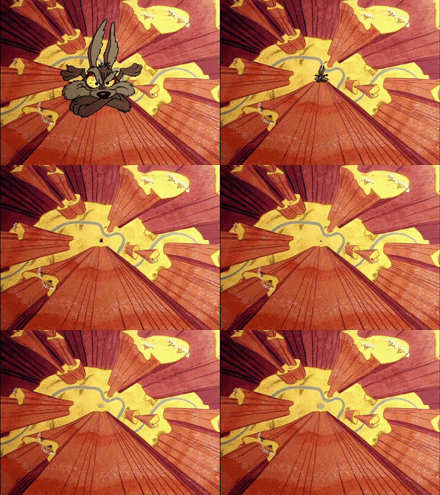
Depending on how old you are, living like this is either not normal at all, the new normal or just the way it is. But given it’s manifestly the condition we’re all stuck in, surely we’d want to put a name to it? Somnambulism is partly right, but there’s a lot of hubris and action and energy. And underneath it all, a sense of a quagmire, or paralysis.
As ever, the Greeks had a word for it. Stasis. It meant, and still means, two things at the same time: a standing still, and factions pulling against each other. Sound familiar? Engineers have it as static equilibrium, forces balanced so that nothing moves. A sound engineer would hear it as a lot of signals and no reference tone. The word is the Greek for standing and medicine borrowed it for a flow that has stopped moving, like blood pooling in a vein. It’s inside metastasis, the word for a disease spreading through the body. They’re all the same thing: pulled in every direction at once, and so going nowhere.
And yes it’s mirrored in the enterprise. Each team lives in its own feed of dashboards, threads, decks and metrics, tuned to what that particular team already watches and consumes. Everyone is busy, and after a while nobody questions what they inherit. Talking through tickets is the easiest thing to do when it’s what everyone else is doing.
But what about upstream? Where the decks and decisions live? Well, the work gets confidently named and funded, and once there’s a budget line it gets delivered whether it matters or not.
The business case is written when we know least, and defended forever.
Each team converts it into its own terms and passes it on, with nothing to check it against. Talk is cheap because nobody can be shown to be wrong. Thucydides noticed that in stasis words change their ordinary meaning. Moderation gets called cowardice, and recklessness gets called courage. Language stops working as a shared reference. You can hear it inside companies. “Customer” means a buyer to one team, a user to the next, then an account, a segment or a persona, and “product” is as loose. Each team works hard for its own version, the efforts pull against each other, and if the company ends up serving an actual person, it’s more by luck than judgement.
None of this began with AI, but AI has made it much worse. Decks, options and plans cost almost nothing now, so there are far more of them, and an agent can arrive already favouring one direction.
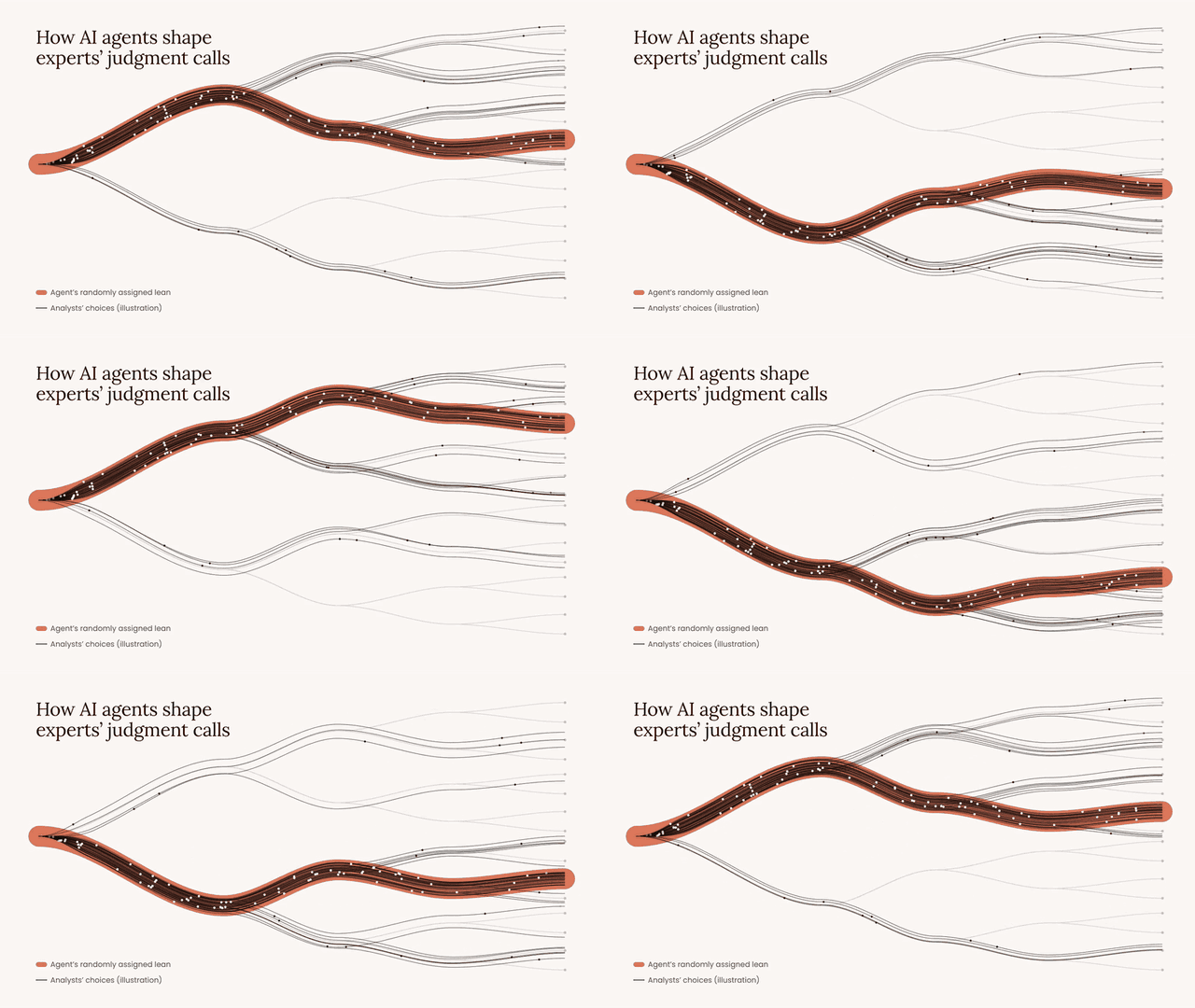
That graphic is from Ross Dawson’s post on Anthropic’s study of how AI agents shape experts' judgment calls, in which a coin flip secretly set which way an agent leaned. The experts mostly followed the agent, and felt the conclusion was their own. The authors suggest giving people time to form their own view first. But that’s exactly what stasis makes extra difficult. It gets harder to keep hold of what we think when everything around us is getting faster and smoother.
More information, or god forbid more data, won’t give us time to form our own view. What’s required, it would seem, is orientation. The Greeks' answers to stasis were all a shared reference to orient by, whether a middle, an oath or a concord. What would that look like in a non-toga setting? Picture a meeting where, instead of three decks, someone who has spent months listening to customers puts one case in front of everyone, the way a good teacher puts one example on the board. It stands for a pattern they’ve seen again and again. It carries weight because its authority is beyond the hubris and higher than a HiPPO. It might show what the three decks have in common, and where they don’t. The product lead, the marketer and the CRM lead each say what they’d do next, and they disagree, but for once about the same thing, and the person who chose it is there to answer. The old word for it is an exemplar. It has carried real weight in many cultures for a very long time, and I’m borrowing it with care. I think we need it back. More on that next time.
This is the first of three posts. The next is the exemplar. After that, something you can try for yourself.
Earlier: Building from the source, not the sediment (2 Jun); I built a thing and that thing turned out to be a boundary object (3 Jul); analysis as autopsy (Mar).
Stratum is early and open at stratum.how.
Follow along: mattburgess.micro.blog/subscribe… mattburgess.micro.blog/feed.xml micro.blog/mattburge… Mastodon @mattburgess@micro.blog